Wyrd
A downloadable game
The Norns wove your thread before you were born. The priest said the water cut it. You do not know who to believe.
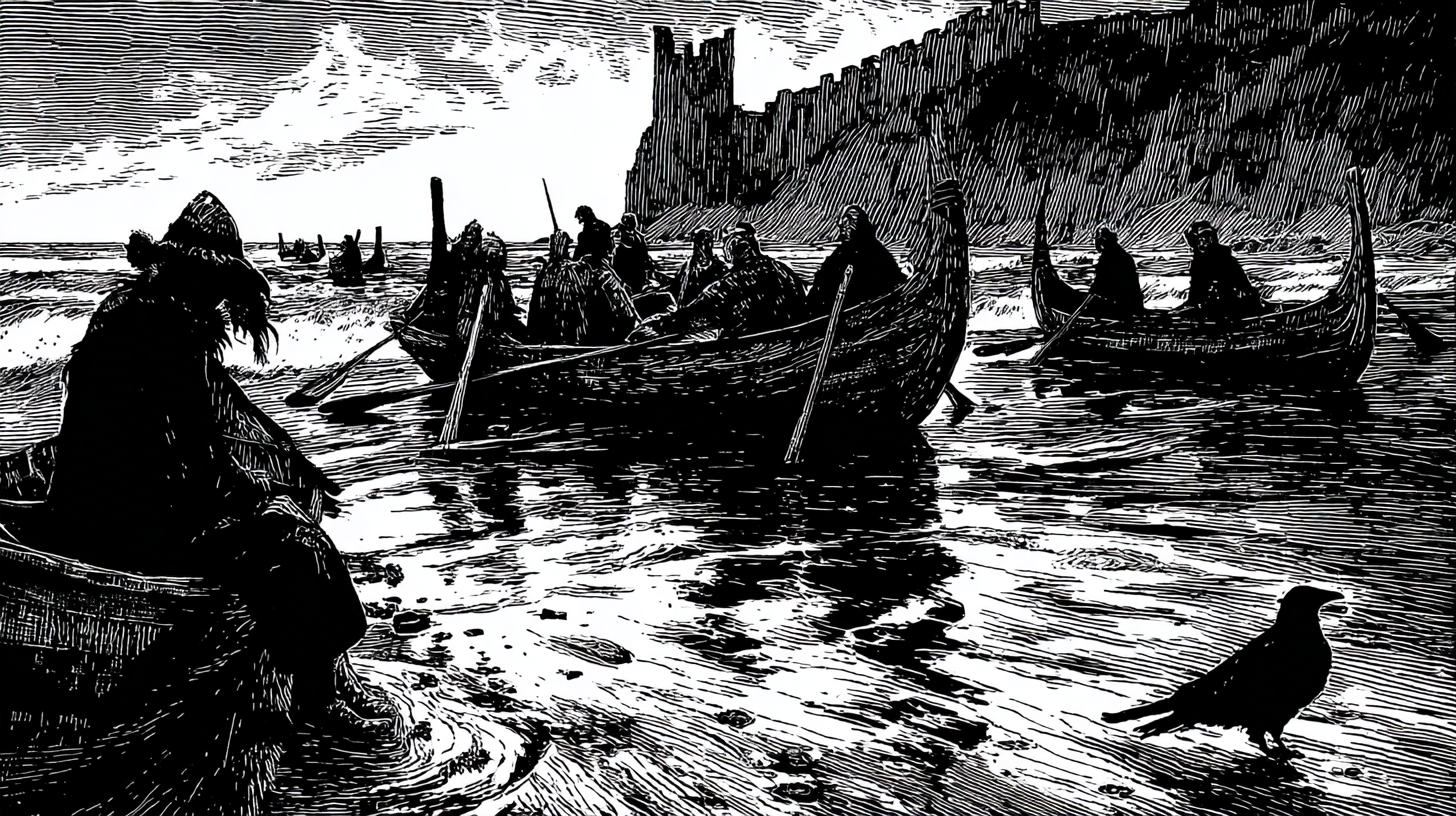
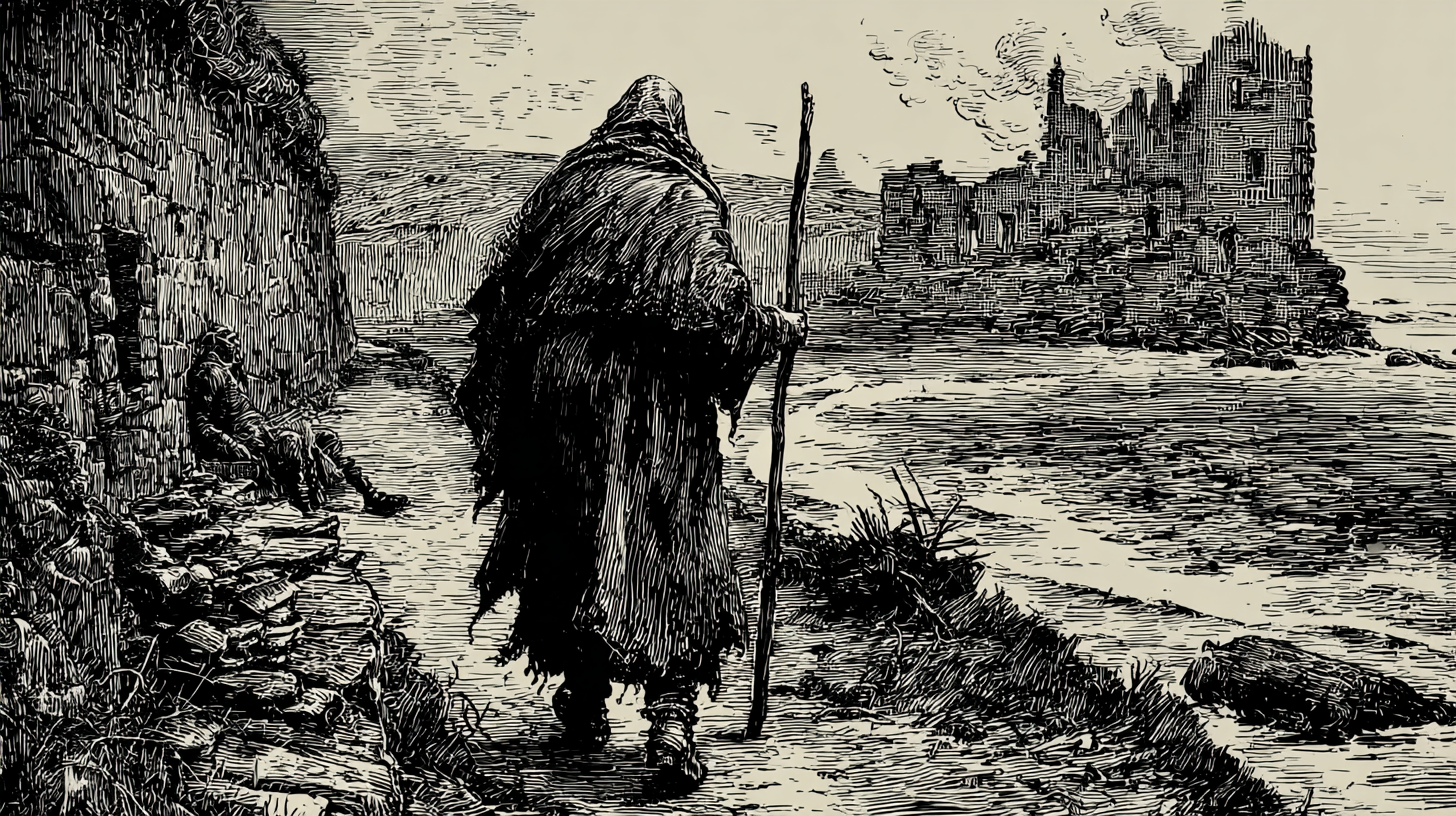
You are Se Hwyrfedgæst — the turned wanderer. A Norse raider who accepted baptism. Not necessarily from faith. Maybe from a sword at your back. Maybe from something that happened on a shore you can't stop thinking about. It doesn't matter. The act is done. The water touched you.
Now you are nothing to anyone.
Your kinsmen call you níðingr — oathbreaker, man without honour — because you have abandoned the gods who carry the slain to Valhöll. The monks call you peccator and watch you with suspicion because a man who burned God's houses last season cannot truly be clean. You sail with neither fleet. You eat alone.
You are the most interesting person in the 8th century and you have nowhere to go.
HOW IT PLAYS
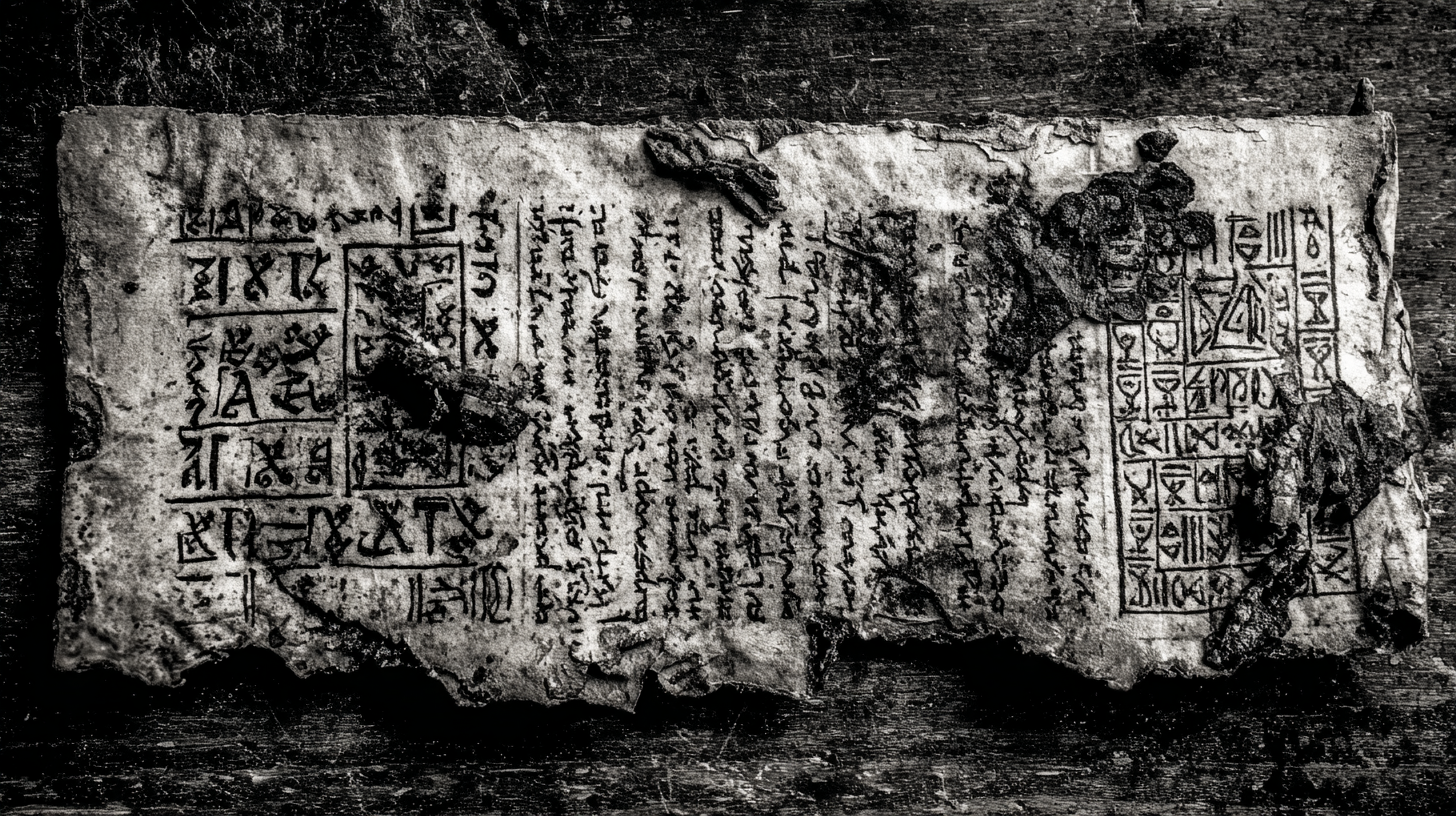
WYRD is a solo journaling RPG. One shore, one session, two dice, a journal. You roll to find where you've landed, who finds you, and what they ask of you. Then you answer three questions — what the old fate demands, what the baptism counsels, and what you actually do.
Every meaningful action costs something. Two resources track your torn identity:
WYRD — your fate as woven by the Norns. It depletes when you act against the old code, refuse what fate has laid before you, or let the White Christ override ancestral certainty. When it reaches zero, the Norns have finished their weaving. Your death comes — but it comes with dóm (fame). You write your own memorial verse.
SÁWOL — your soul, the thing the baptism promised was clean. It depletes when you raid, kill without cause, break commandments, or consult the völva. When it reaches zero, the conversion was hollow. The White Christ releases you. Something is permanently gone — you know what forgiveness felt like, even once.
No path keeps both full. The game is not about survival. It is about which self you spend down first.
WHAT'S IN THE TRIFOLD
→ Six 2d6 generation tables: The Shore, The Encounter, The Demand, What the Norns Whisper, What the Sáwol Hears, The Ending
→ Four asymmetric origins: The Reluctant, The Seeker, The Strategist, The Penitent
→ Dual resource system (Wyrd / Sáwol) with pressure mechanics
→ Period-authentic Old English and Norse vocabulary woven throughout
→ Eight journal prompts for deep play
→ Extended play rules for multi-session arc
→ Full glossary of period terms
Print-and-play trifold. Two pages, 8.5×11 landscape, black and white. Standalone — no other books needed. One session per shore. Carry your resources forward for a longer arc.
THE JOURNAL GAMEBOOK
The trifold asks what happens tonight. The Journals ask what happens to this person across seven years.
WYRD: The Hwyrfedgæst Journals is a full solo RPG campaign set across the Northumbrian and Irish coasts, Frankish river towns, and Norse Danelaw territories of 793–800 CE — the first generation of systematic Viking raiding, when the question of what the Norse world was becoming was genuinely, violently open.
You play Se Hwyrfedgæst — the turned wanderer, the Norse convert — through a complete three-act arc. The baptism happened before the game begins. The cost arrives across sixteen sessions.
THREE ACTS. ONE QUESTION.
Act One — Se Ceap (The Bargain): The baptism is recent. You are still performing your new identity. The cost hasn't arrived yet.
Act Two — Se Wrǣc (The Exile): Both communities have rendered their verdict. You are between worlds permanently. The Minnung system activates — your past returns with mechanical weight. The Norns begin whispering more frequently. The White Christ's silence becomes its own presence.
Act Three — Se Ende (The Ending): The resources are depleted. The question is no longer what do you believe but what does it cost to be this person all the way to the end.
WHAT'S IN THE GAMEBOOK (50+ pages)
→ Complete three-act campaign structure with act transition mechanics
→ Six named historical locations: Lindisfarne, York (Eoforwic), Iona (Ícolmcille), Southampton (Hamwic), Orkney (Orkneyjar), Frankia coast — each with own Shore and Encounter tables and documentary sidebar
→ The Minnung System — memory mechanics where past acts return with mechanical weight: Blóð-Minnung (blood memory), Giefu-Minnung (gift memory), Geleáfa-Minnung (faith memory)
→ The Seiðr Subsystem — forbidden knowledge at triple cost: Wyrd, Sáwol, and Frith (social standing)
→ The Flyting Subsystem — ritual verbal combat; words as weapons, identity as the battlefield
→ The Frith Track — your standing across all communities, from trusted to níðingr
→ Five full scene endings, each requiring a different resource and Minnung configuration: The Sword Ending, The Cross Ending, The Hermit Ending, The Witness Ending, The Third Thing Ending
→ Five named NPC encounter profiles: Alcuin of York, The Lindisfarne Survivor, The Danelaw Völva, The Political Convert, The Irish Monk
→ Four asymmetric origin variants with campaign-long mechanical implications
→ Historical note, primary source bibliography, and period vocabulary glossary
→ Quick reference and character sheet
THE FIVE ENDINGS
This game has five full scene endings, not five table results. Each is earned through play.
The Sword Ending — Wyrd depletes first. You die fighting. Write your memorial verse.
The Cross Ending — Sáwol depletes first. You return to the old ways entirely. But the water changed something permanent that the renunciation cannot reach.
The Hermit Ending — Both resources near zero, no violence in Act Three. A cave on a northern coast. Both gods know where you are. Neither sends for you.
The Witness Ending — Frith holds. You survive. You become old. Someone younger asks how you carried it. The game ends in their voice, not yours.
The Third Thing Ending — Available only if you have earned it. Something beyond both cosmologies. The game provides the question. You write the answer.
THE REAL HISTORY
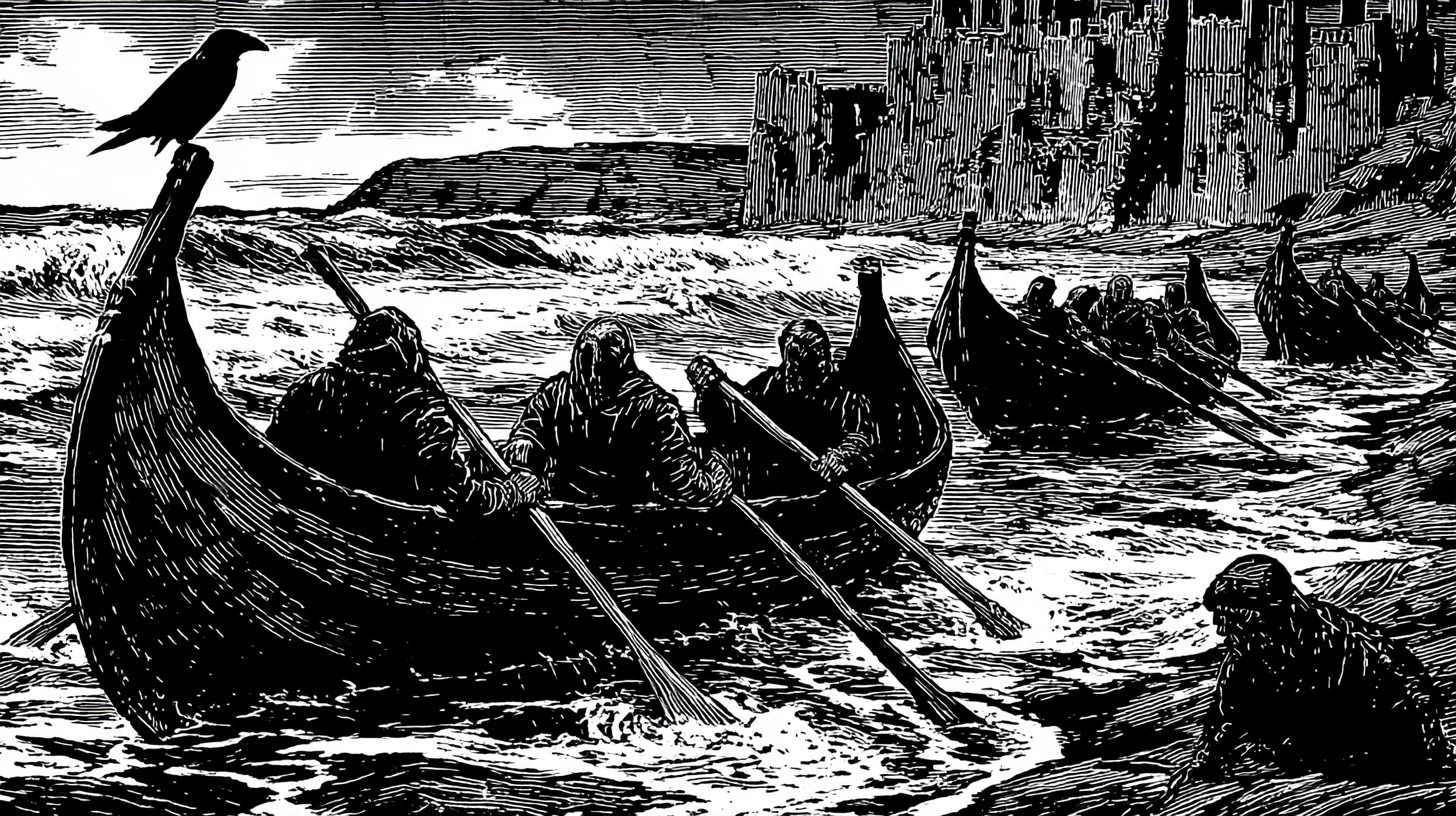
793 CE. The monastery at Lindisfarne fell to Norse raiders in June. The monk Alcuin of York wrote a letter calling it God's punishment for Saxon moral decay. The Norse who raided it did not, by and large, think they were doing anything religiously significant. They were raiding an undefended wealthy target. The monks' interpretation — divine punishment, pagan devils, the end times — is where the mythology begins.
The reality is more complicated. Norse conversion to Christianity during this period was not clean, not fast, and not one-directional. Men accepted baptism and continued raiding. Jarls converted politically while their households kept the old practices. The völva and the priest existed in the same village for generations.
WYRD is for the people living in the overlap.
Designed by Julian Grant · Julian Grant Games · jgesq.itch.io Pay What You Want · Print & Play · 793 CE · Solo RPG
Download
Click download now to get access to the following files:
Development log
- The Shore Between Two Gods: A Note on WYRDMar 28, 2026
Leave a comment
Log in with itch.io to leave a comment.